


【Dedication to Craftsmanship Product Chapter】Ten Years of Forging Ahead, Practicing the Craftsman Spirit - The Upgrading Path of Hongbo PVC Material Conveying System
Release time:2017-08-07
Contributor: Song Caizhong Editor: Wu Yunhua
"Speaking of this experience, it was an unforgettable journey for me, the production equipment technology team, Mr. Liao, and even the entire Hongbo company." Plant Manager Song Caizhong reminisced with emotion as he recounted the tortuous development history of Hongbo's PVC automatic batching and conveying system over the past 10 years. Since establishing the first PVC weather-resistant plastic corrugated tile production line in China in 1988, Hongbo has forged an unbreakable bond with PVC technology, equipment, and products. In the past, the PVC production technology and equipment introduced from Taiwan were more advanced than domestic production lines at the time, but the batching and conveying link, crucial for controlling quality stability, was still manually operated. Manual operation caused many losses. In its nearly 30 years of existence, Hongbo has spent a third of its time independently researching and transforming its PVC automatic batching and conveying system. This not only challenges and subverts the existing model but also demonstrates a dedicated pursuit of quality stability.
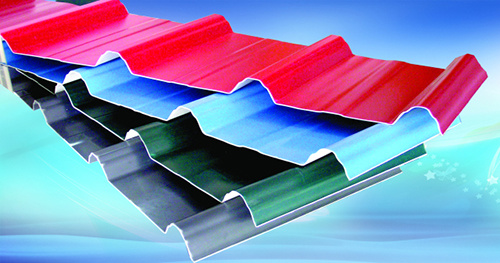

APVC tiles produced in 2004
Revolutionizing the traditional manual workshop production model, exploring on-site material separation for the first time
In the traditional production process of the PVC industry, all components of the product raw materials are weighed by on-site workers using traditional methods and then added to a high-speed mixer for mixing in an open workshop, one component at a time. Each PVC product requires at least 8 or more materials, such as PVC resin powder, fillers, heat stabilizers, colorants, and UV agents. The proportions of various materials differ greatly; for example, 100 parts of resin powder may be needed for a PVC product, but only a fraction of a part of colorant. The number of components in the product and the high accuracy of the weight make the mixing process, which is traditionally done manually, prone to human error and unstable product quality.
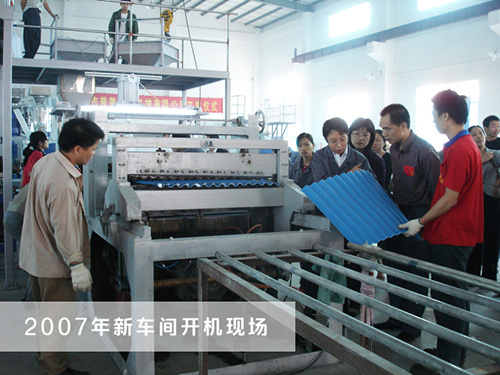

In view of the above problems, when Hongbo built the first phase of its new workshop (Workshops 1 and 2) in 2006, Chairman Liao Xuange decided to take the exploratory first step in reforming the traditional batching operation method.
1. Classified batching processing, with specialized personnel handling mixing.
2. Zonal separation, adding modern dust removal equipment.
Although these two innovative measures still used traditional methods, the key part of PVC batching was handled independently, effectively improving the stability of the batching weight and strengthening worker management. These seemingly simple measures require pioneering wisdom and courage, as well as a pursuit of consistent product quality.
Being the First in the Industry, forging ahead on the path of craftsmanship
After the initial innovation, there was a certain improvement in product quality stability and the environment, but the limitations of manual weighing were not fundamentally eliminated. "As far as our thinking reaches, Hongbo can go that far. Precisely measuring and conveying materials through industrial automation is the essential revolutionary path for Hongbo to achieve consistent, high quality." This is a sentence that Chairman Liao has always kept in mind. After three years of research, Chairman Liao decided to design and build a new automated material measuring and conveying system for the second phase of Hongbo's new workshop (Workshop 3) in 2009. The investment in the automated mixing system equipment was as high as one million yuan. However, Hongbo did not receive the favor of fortune's goddess. Because domestic equipment was manufactured based on Japanese and Taiwanese technologies, it did not possess core technologies and the understanding of the entire scheme was insufficient. The high level of technical expertise required for automated equipment was underestimated, leading to continuous problems during system operation. During this period, Chairman Liao led the entire technical team to work continuously for three days and nights to accurately record the operating conditions and adjust the system's technical problems.
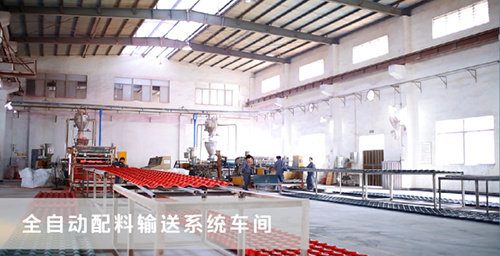

Without successful precedents to refer to, Hongbo could only continuously summarize experience from its own failures. After the setback with the automated batching system in Workshop 3, Chairman Liao did not change his initial intention. In 2011, Chairman Liao led the technical team on a two-year research journey for the automated batching system: 1. Consulting with domestic and foreign equipment suppliers, learning the technology of PVC powder metering and conveying from the basics; 2. Visiting many practical engineering Cases, studying the practical Cases of automated powder conveying in different industries, and conducting multi-faceted discussions and research on solutions for the multi-variety and multi-color nature of PVC.
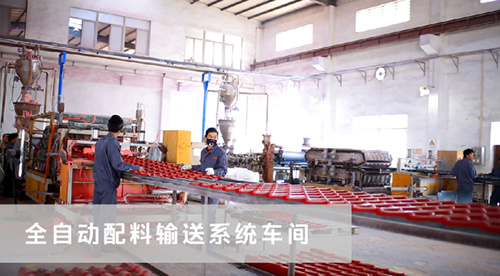

After two years of research and learning, Hongbo had a clearer and more detailed blueprint for the automated batching system. At the end of 2012, Chairman Liao decided to invest 10 million yuan to upgrade the automated system in Workshop 3 using a new fully automated Taiwanese metering and conveying system, and upgrade the APVC tile structure from three layers to four. The entire batching system project was divided into three stages: conveying, metering, and production. Each stage was demonstrated, hardware was installed and debugged, experience was summarized, and improvements were made in subsequent stages. By the end of 2014, the automated batching system project was fully completed and put into use. To this day, the entire APVC production system has become an industry success story and a leading product.
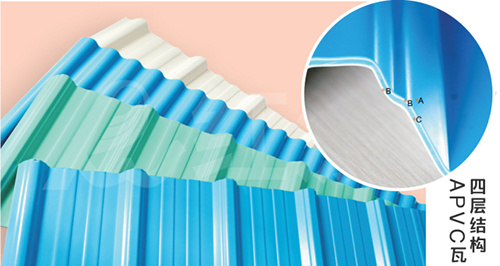

The brand-new APVC tiles produced in 2014
As the poem says: The road is long and winding, I will search high and low. The 10-year journey towards automating the PVC batching and conveying system has been tortuous, but Hongbo, as an industry pioneer, has continuously explored the root causes of problems, carefully studied key technologies, made breakthrough improvements from the root cause, and adhered to its unwavering commitment to craftsmanship amidst multiple failures and continuous exploration. Hongbo's ability to become the only company in China's PVC plastic roofing material industry to use a fully automated batching and conveying system and to maintain stable operation is not due to good fortune, but rather to Hongbo's relentless pursuit of technology and product quality and its dedication to the spirit of craftsmanship. In the era of the market economy, low-end inferior products are rampant. Hongbo has always adhered to its commitment to consistent, high-quality products and continues to explore and take firm steps towards industrial automation and intelligent manufacturing in the PVC plastic roofing industry.


Related News
Contact Us

National unified service hotline
400-161-3388
No.6 (F1-F9), Residential Quarter B, South of Leping Town Central Science and Technology Industrial Zone Planning, Sanshui District, Foshan City, Guangdong Province
Powered by www.300.cn | SEO Tags | Privacy Policy